
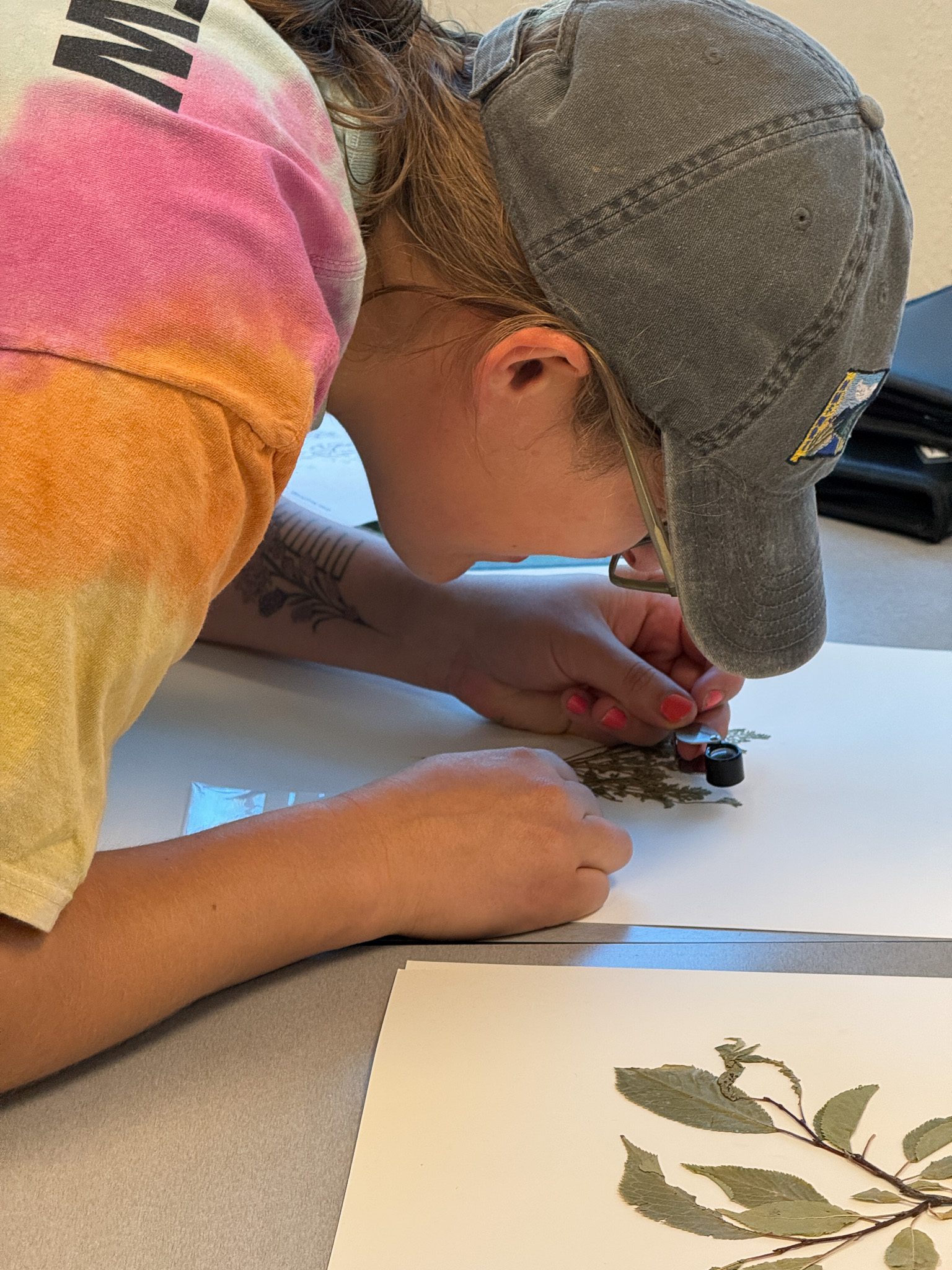
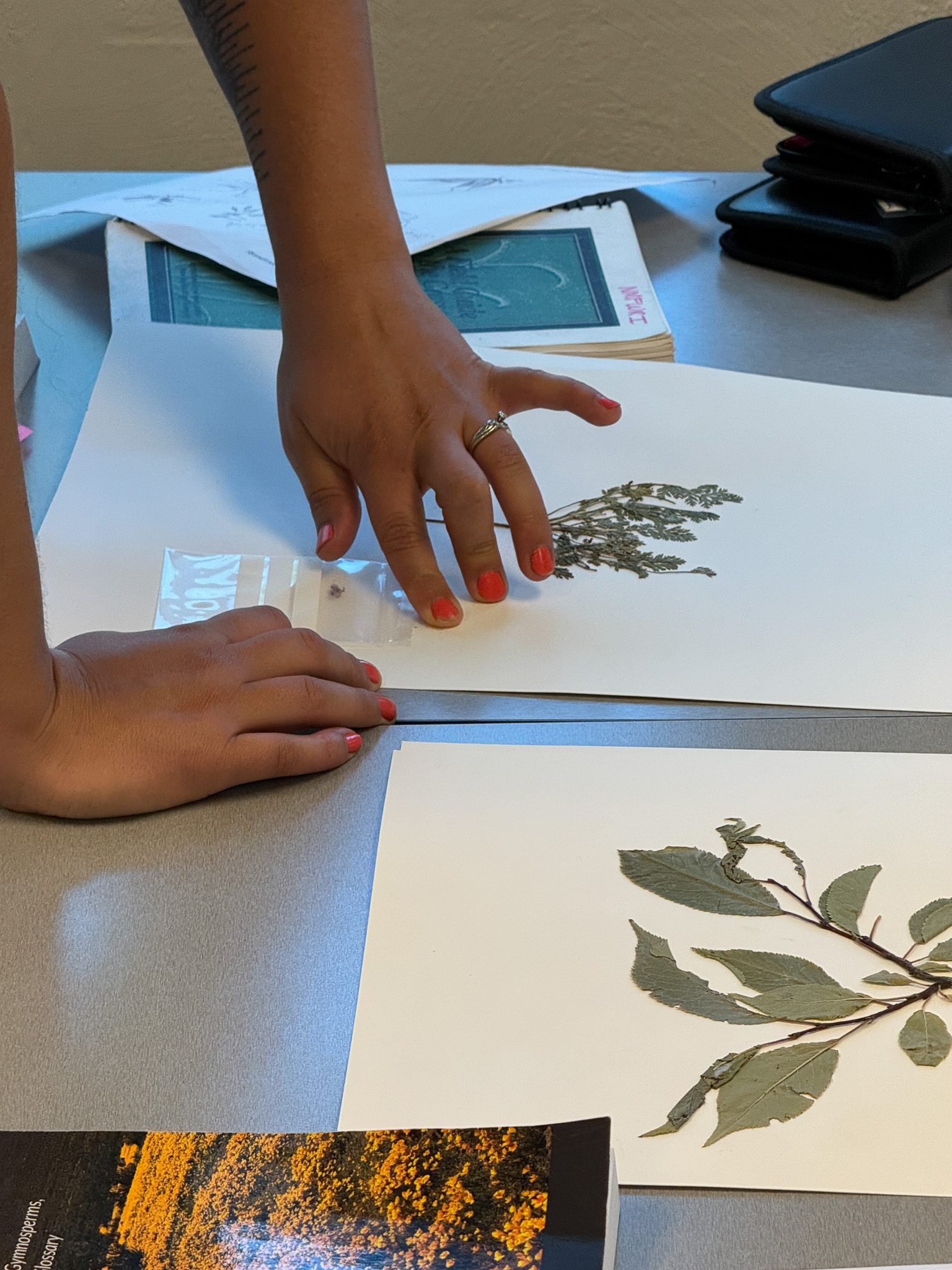
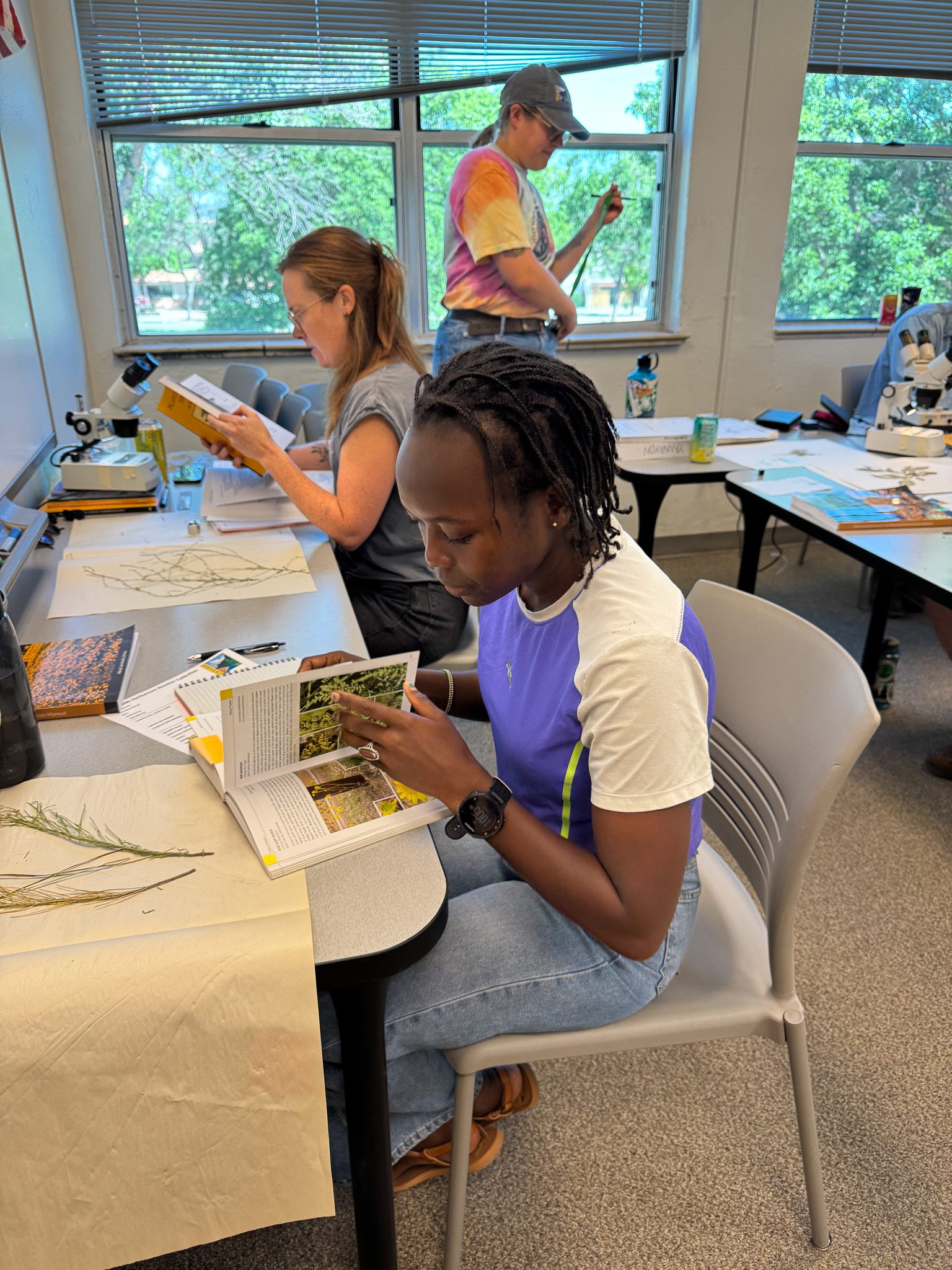
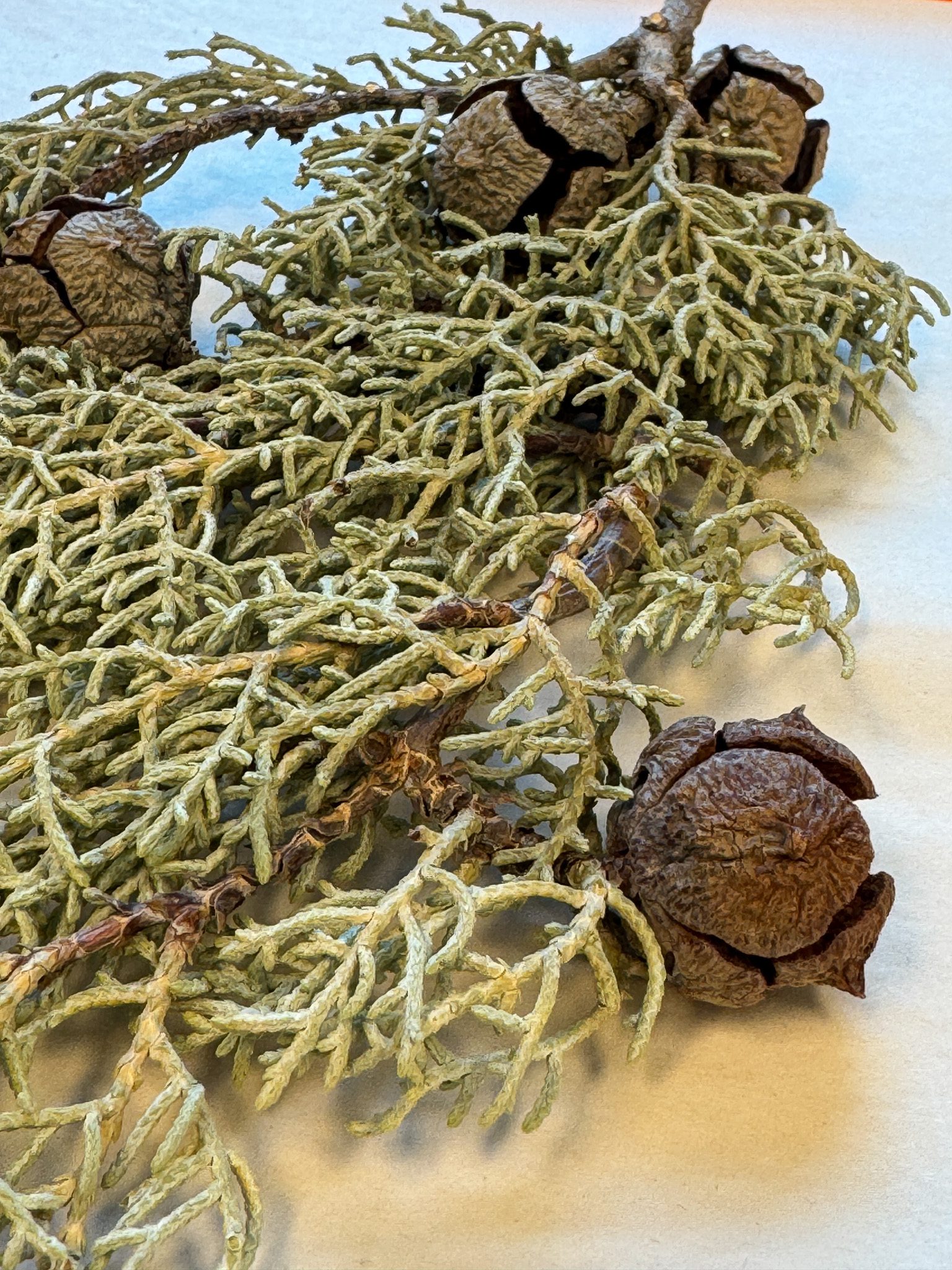
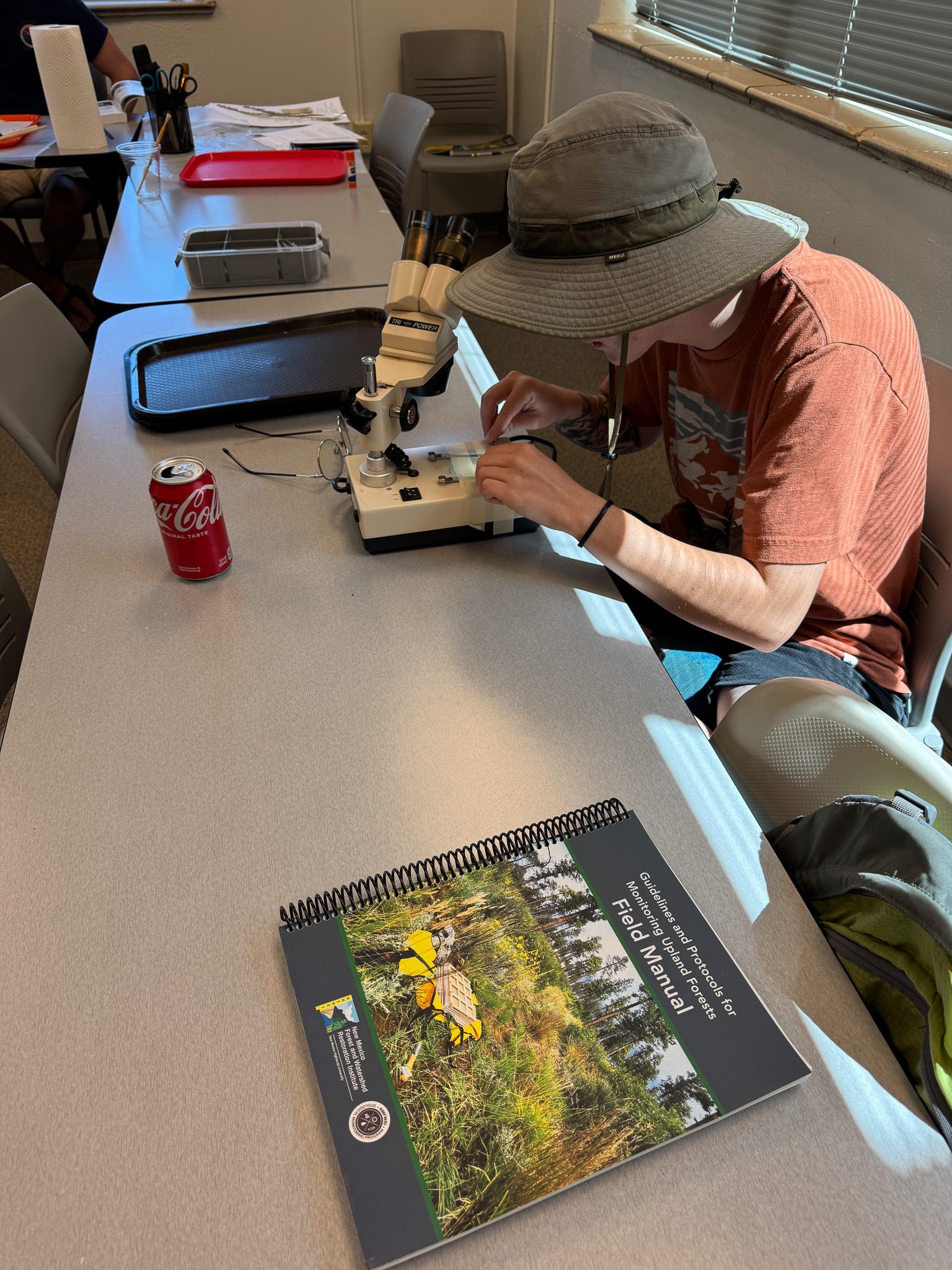
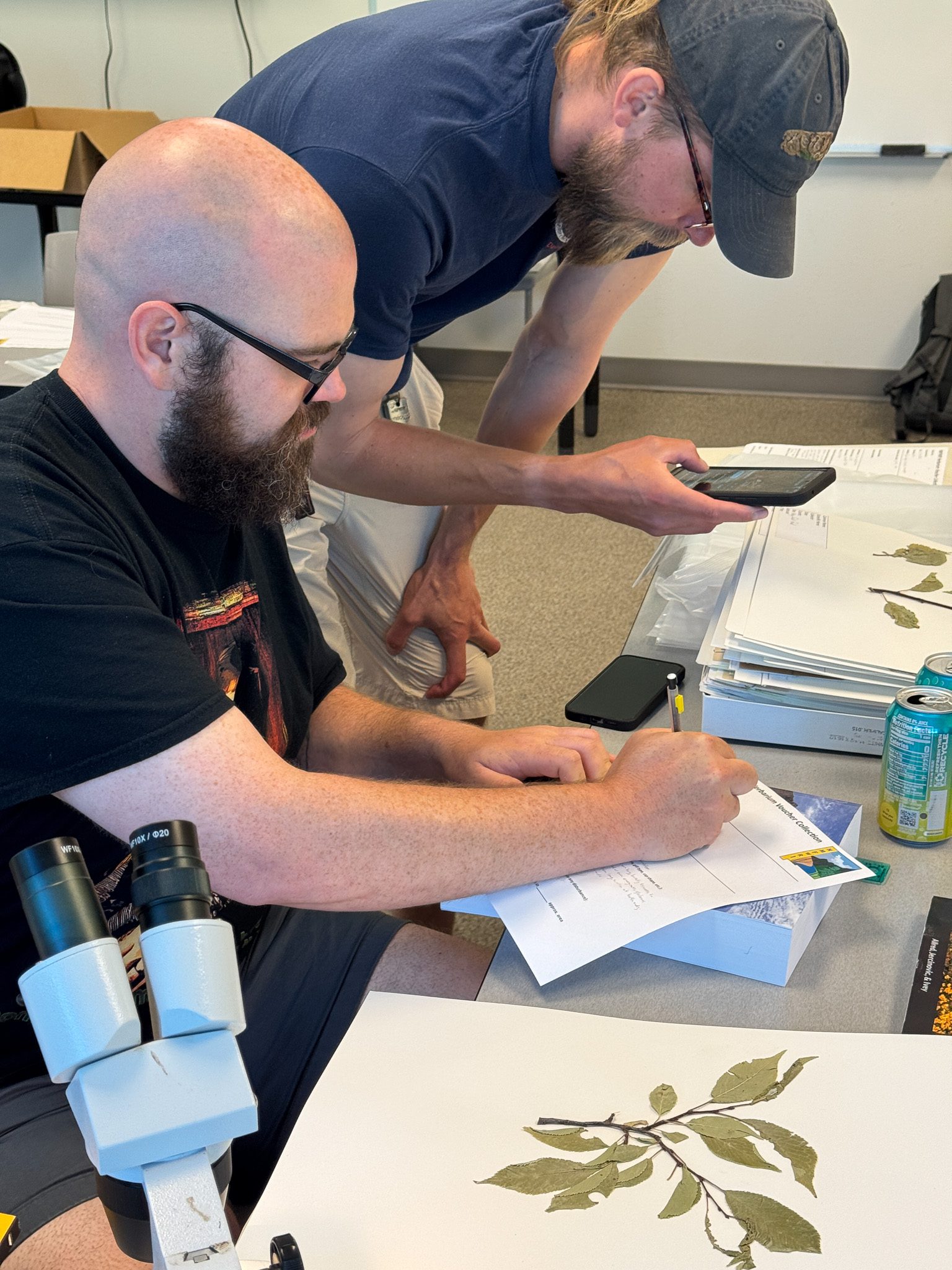
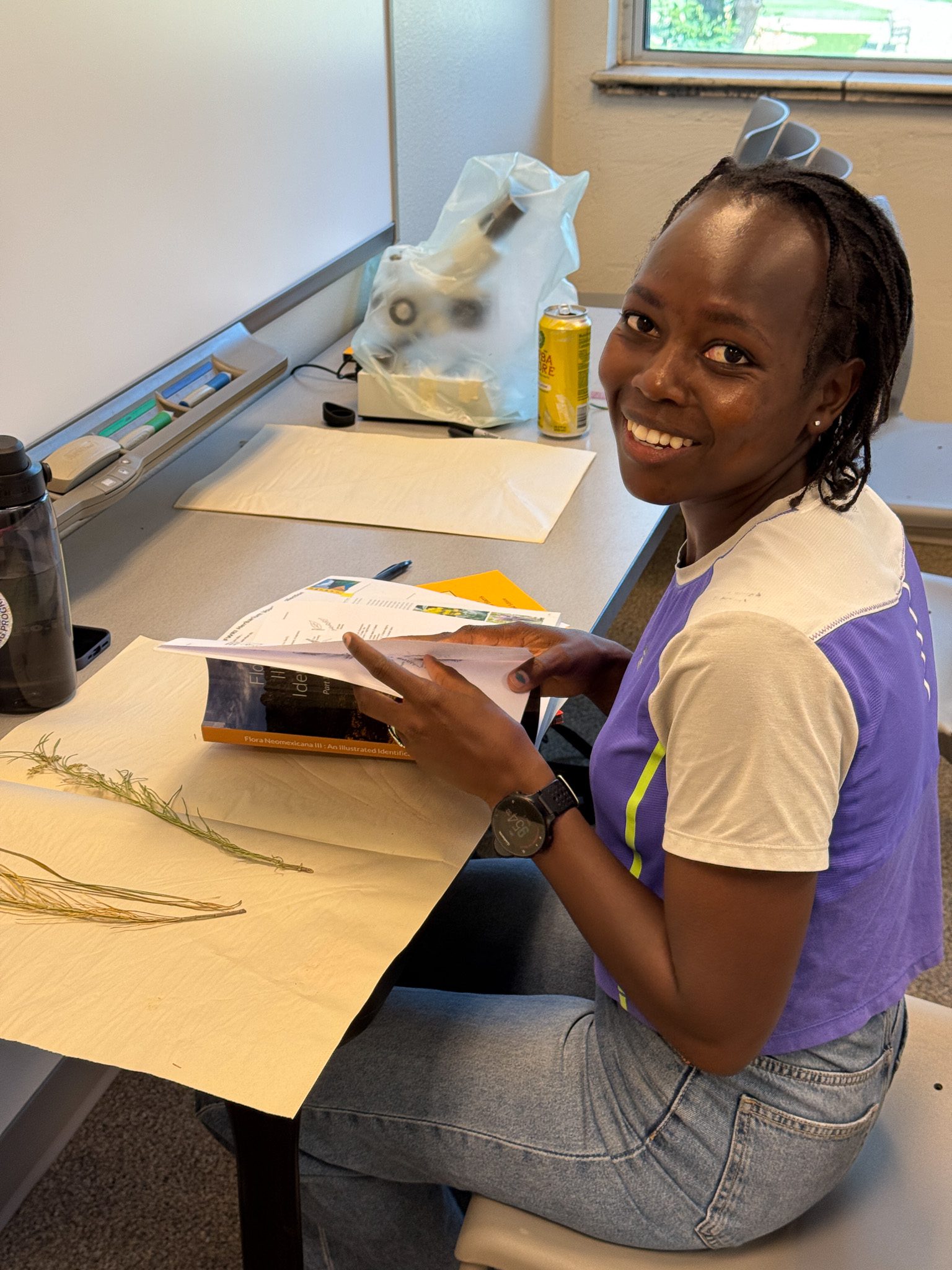
NMFWRI’s ecological monitoring team and colleagues from other programs spent two July days identifying and cataloging plant specimens to add to the Institute’s herbarium. Emily Yannayon, Ecological Monitoring Specialist, talked about the process and how an herbarium helps with forest health research.
How many specimens were processed in July? How many specimens are in the NMFWRI herbarium?
I estimate that we identified and mounted more than 50 specimens over the course of those two days. The count of specimens in the herbarium is also incomplete, though we have 181 specimens in our inventory spreadsheet.
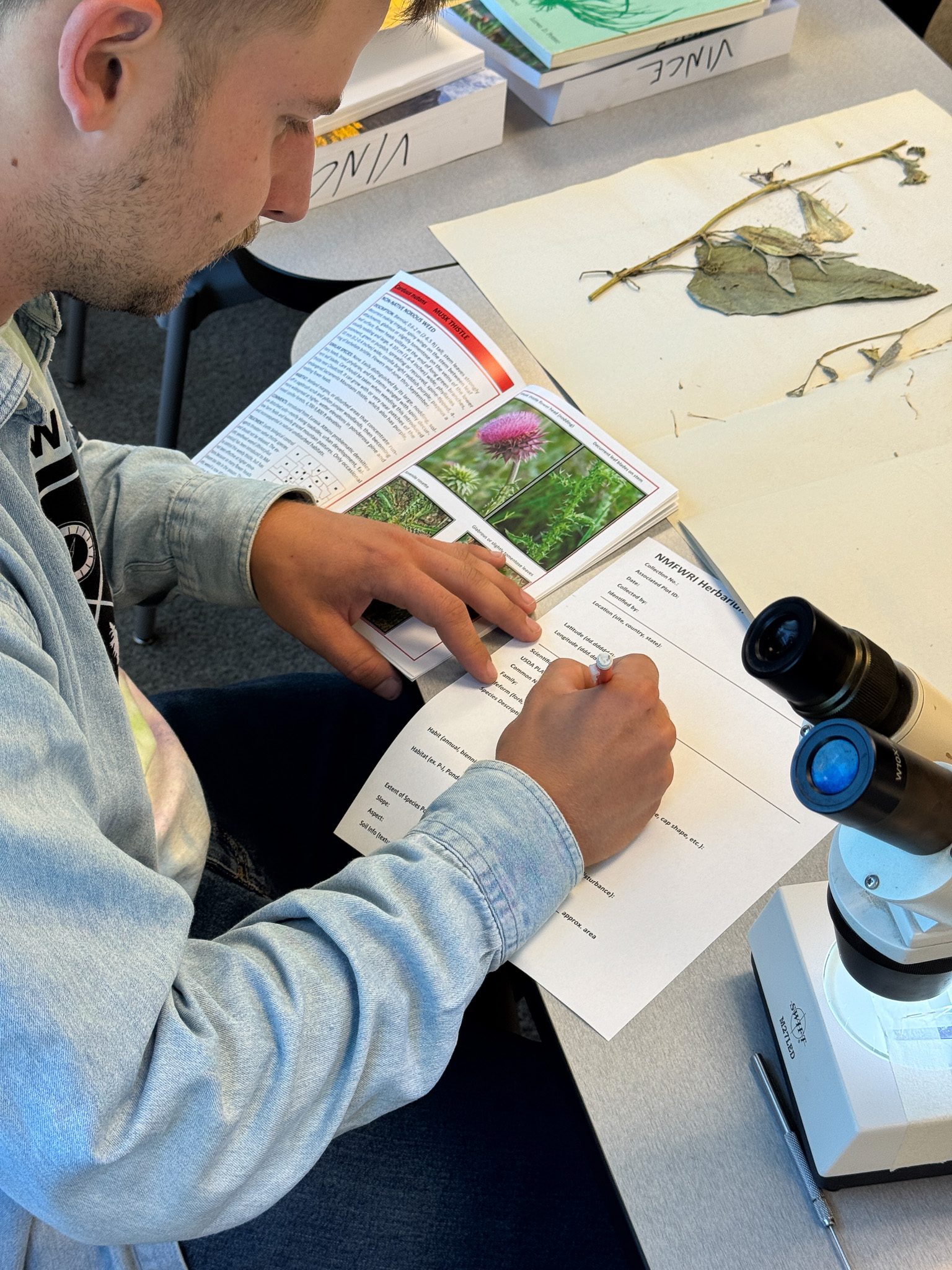
What kind of specimen information do you catalog?
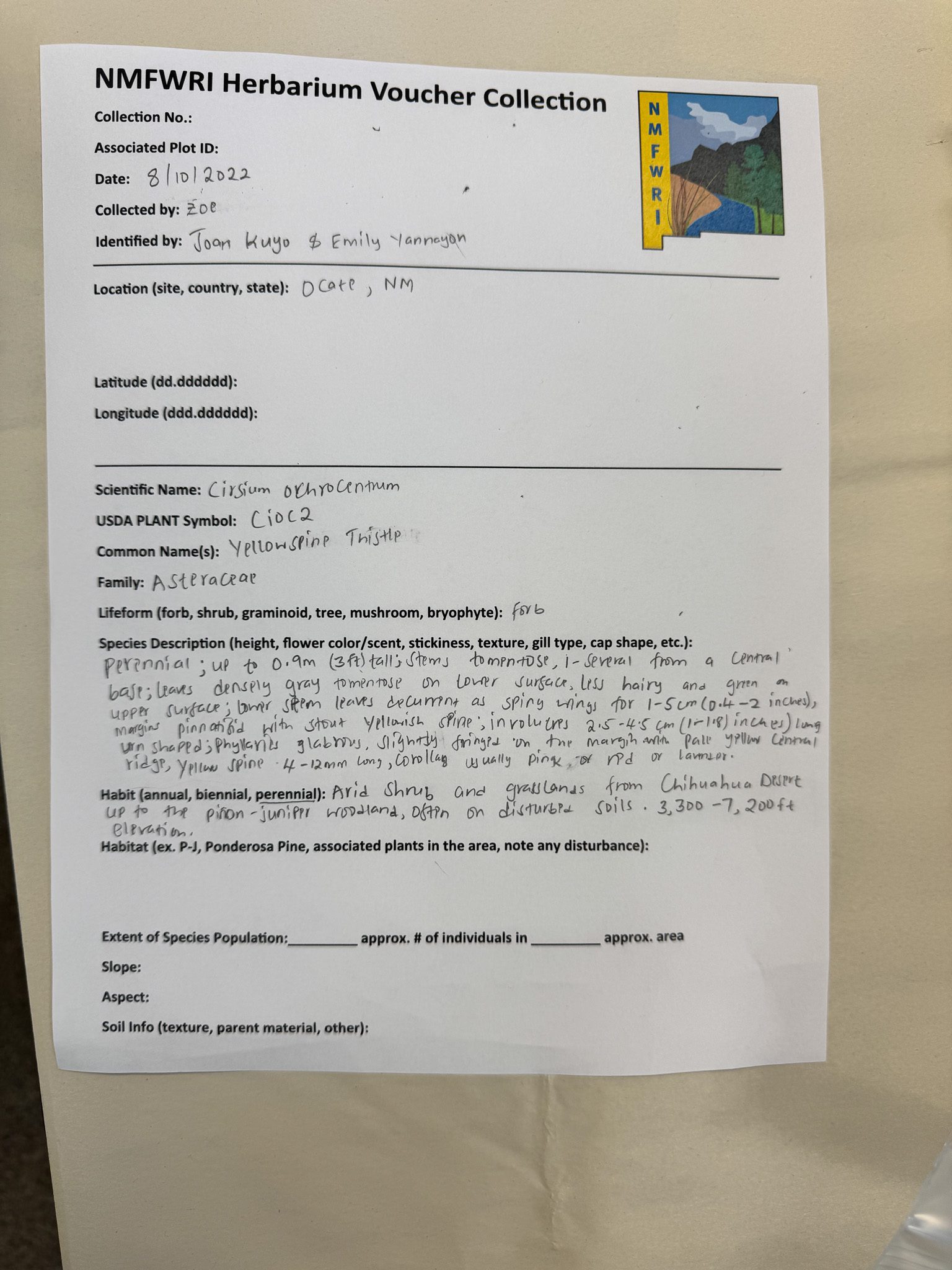
Specimen information that we collect and catalog includes:
– Unique identifier with area, year, and an integer
– Collection date, name of collector
– Location: coordinates, and a habitat description, which includes land form, ecosystem type, substrate, and other co-occurring plant species
– Scientific (latin) name, common names, family, and lifeform (forb, shrub, tree, etc.)
– Species description because some things, such as scent or flower color, are not preserved after a specimen is dried.
What are some of the tricks and tips to identifying specimens correctly?
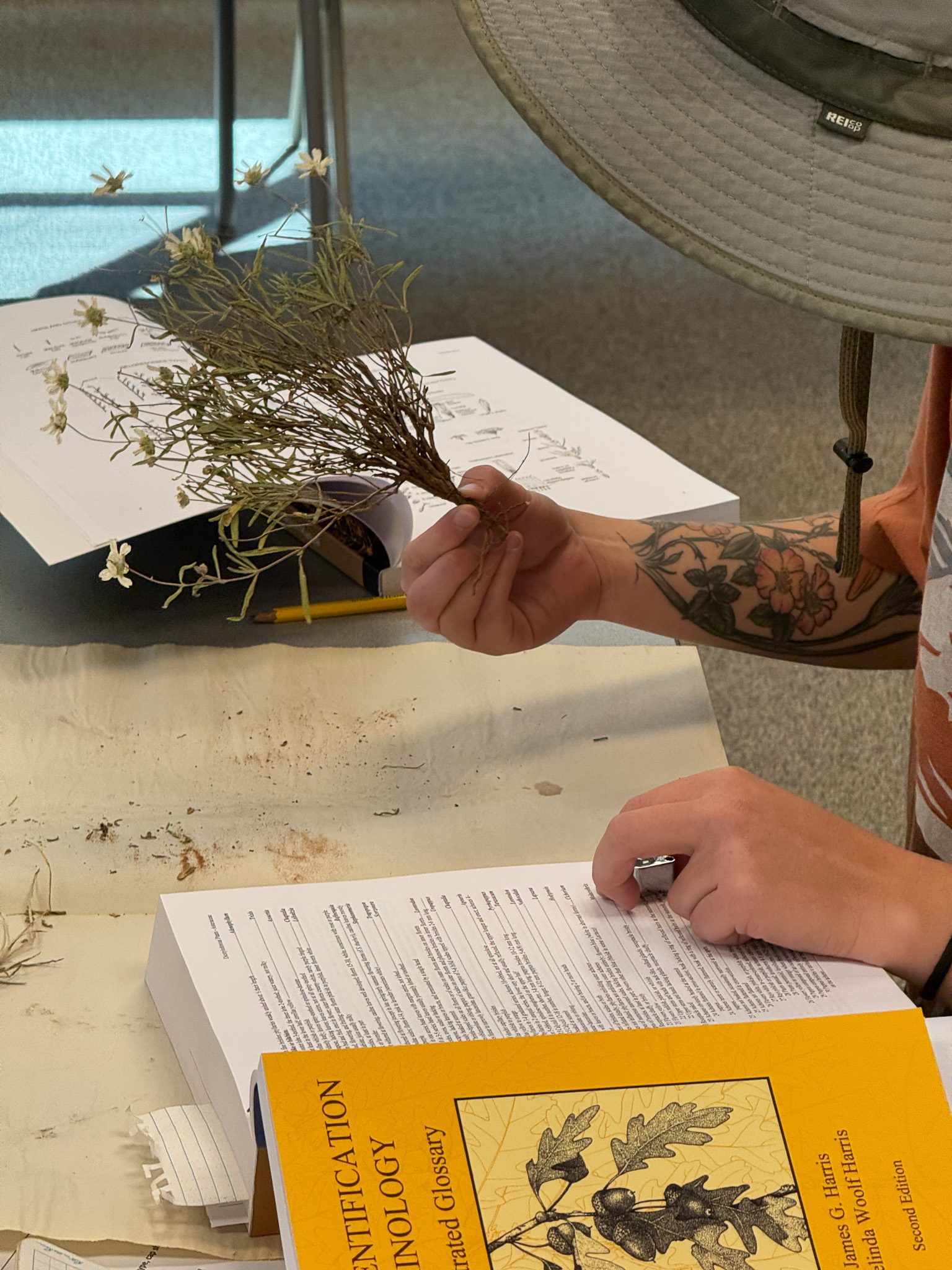
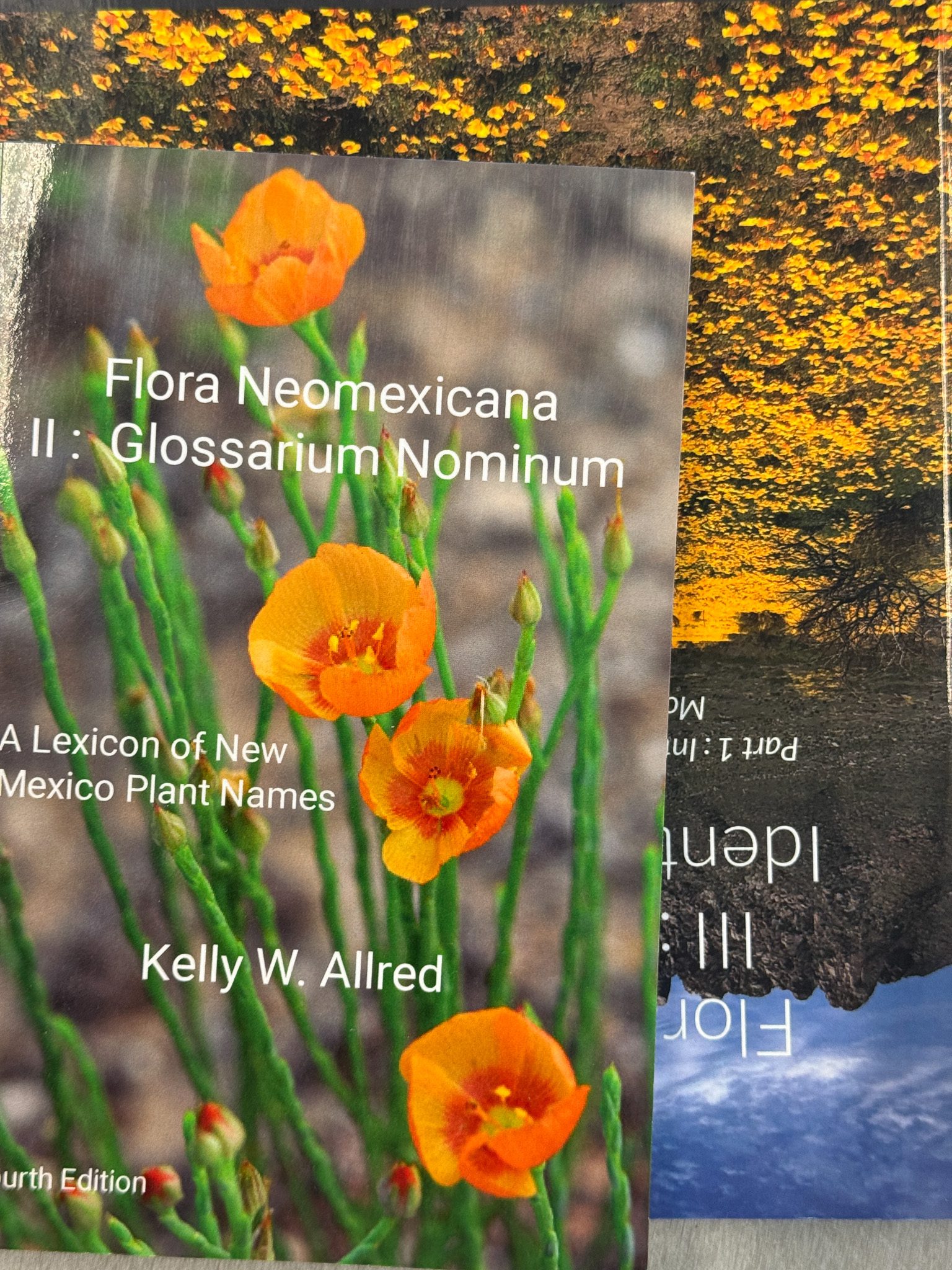
We use prior experience and a variety of resources, such as field guides. Reference our favorites here at New Mexico Plant Guides. Those with botanical training usually reach for Flora Neomexicana, a dichotomous key for the state of New Mexico.
Dichotomous keys lead the user through a decision tree about characteristics of the plant, eventually reaching a species identification. For example, is the plant a shrub or tree; or an herbaceous, non-woody plant? Other questions may ask about leaves: are the leaves growing
"All these specimens can be used to teach people how to identify the plants that we share our world with, and how to exist with them thoughtfully."
– Emily Yannayon, NMFWRI Ecological Monitoring Specialist Tweet
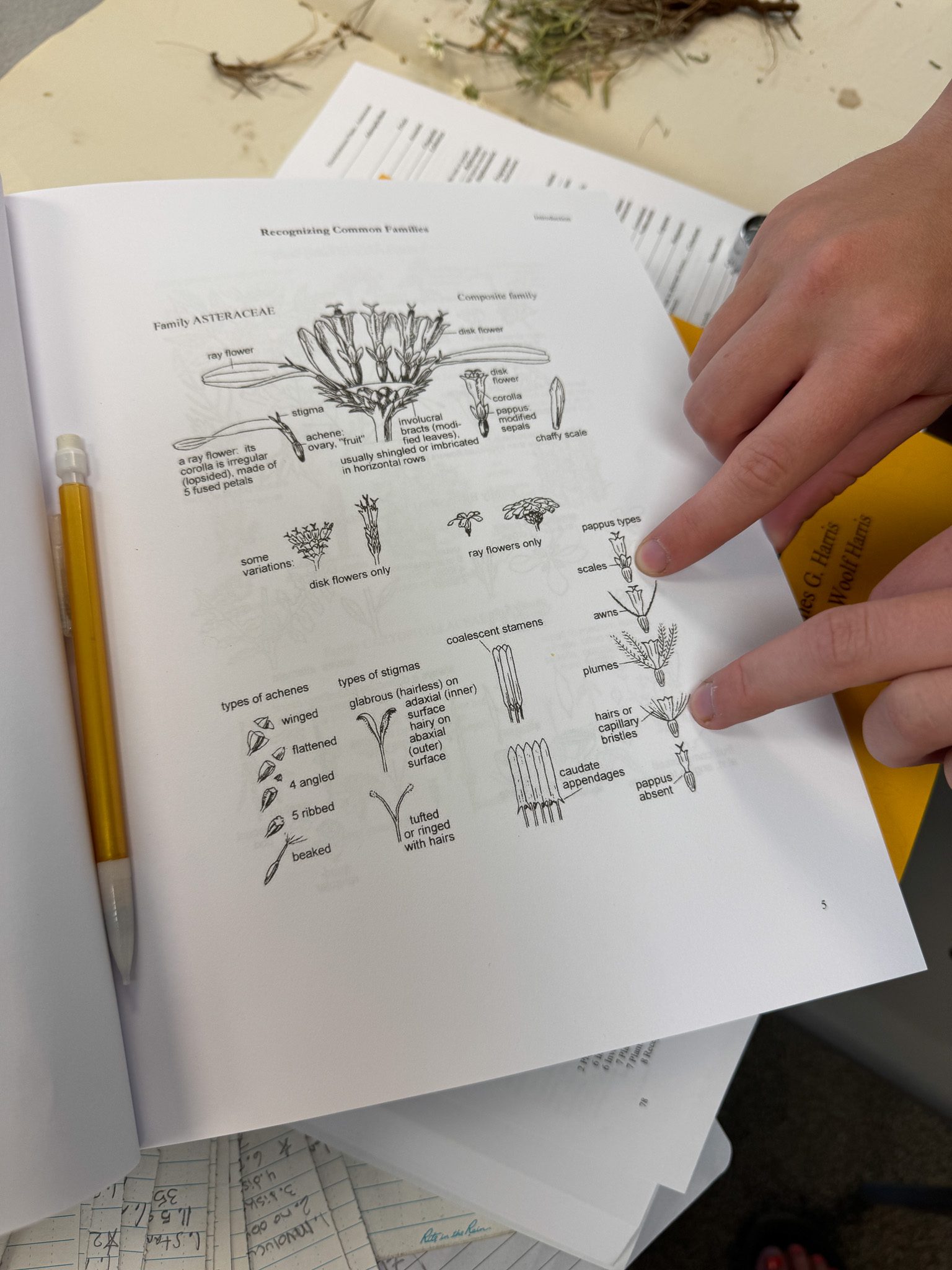
opposite each other on the stem, or do they alternate growing out of either side of the stem? Are the flowers pink and purple, or red and yellow?
Often, the differences between two species of plants can be minute, on the order of millimeters of size of a small part of the flower, or the length of a hair on the stem of a plant. In
these cases, we have to utilize other tools, like rulers, hand lenses (or loupes), dissecting scopes, tweezers, pin tools, and sometimes razors to cut open parts of the plant.
Can you describe the process, including mounting?
1. Collection: We collect specimens while in the field, harvesting the plant using garden shears/clippers, and sometimes a soil knife, also known as a hori hori, to dig up an entire plant. Specimens should include important identifying features: flowers and/or fruits, complete leaves, and sometimes roots. The specimens are arranged neatly on newsprint,
within a plant press. We arrange the plant so all the parts will lay flat and will be visible when pressed. The specimen should fill most of the sheet, but not crowd the paper. The
plant is then placed in a stack of blotting paper to absorb excess moisture and corrugated cardboard for ventilation; and the entire stack is compressed between a wooden lattice held together by straps.
2. Drying: specimens require at least 1 to 2 weeks to dry. They should be in a well-ventilated area out of the sun.
3. Mounting: dried specimens are mounted on special acid-free archival paper with archival glue. Less is more! Glue is diluted, and then plants are either dipped in the glue or glue is brushed onto the plant. We arrange the plant in an aesthetically pleasing way, ensuring all parts will lay flat and will be sufficiently visible for reference. We also include a small card at the bottom of the specimen sheet with all pertinent information.
4. Specimens are stacked with wax paper to prevent sticking and heavy books or other objects. They’re allowed to dry for at least 48 hours.
5. Once dry, specimens are added to the inventory, and filed away under the family and genus groups (related and similar plants) in a ventilated herbarium cabinet at the NMFWRI Ecological Monitoring office.
Why is an herbarium important? How can it be useful in the big picture of forest health and monitoring?
Our herbarium is used primarily as a teaching or working herbarium. We preserve and catalog specimens for use in the classroom, training new employees in the monitoring program,
and for public or private events. In addition to plants, we also have specimens of pests and diseases that effect trees, such as bark beetles, or mushrooms that grow on tree trunks. All these specimens can be used to teach people how to identify the plants that we share our world with, and how to exist with them thoughtfully.
Which plants are helpful, and which can be harmful?
How do we detect signs of disease in trees? Who are our green neighbors?
Herbaria across the world are also valuable sources of information. Scientists and researchers use specimens to build a picture of which species are present in an area, in the past
and the present. Scientists can extract DNA from specimens, examine for signs of pests or disease, track the relationship of weather and plant growth, follow the spread of invasive
species, and determine the makeup of the plant community at a location without actually visiting any of those places; all of which can inform important questions about ecosystem health.
The NMFWRI herbarium is open to all students and faculty at New Mexico Highlands University for research and education, upon request.