One of the most effective ways to spark momentum in reducing local wildfire hazards is by hosting a Community Chipper Day. Whether your neighborhood is just beginning its fire‑mitigation journey or continuing long‑standing efforts, each participating home or property becomes part of a larger, more fire‑adapted community and landscape.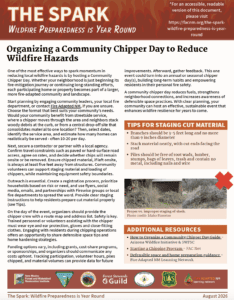
Start planning by engaging community leaders, your local fire department, or contact Fire Adapted NM, if you are unsure. Choose the format that best suits your community’s needs. Would your community benefit from streetside service, where a chipper moves through the area and neighbors stack woody debris at the curb, or from a central drop‑off site that consolidates material to one location? Then, select dates, identify the service area, and estimate how many homes can realistically be served – often 10-20 per day.
Next, secure a contractor or partner with a local agency. Confirm travel constraints such as paved or hard‑surface road access, agree on rates, and decide whether chips will remain onsite or be removed. Ensure chipped material, if left onsite, is always at least five feet away from structures. Community volunteers can support staging material and loading of chippers, while maintaining equipment safety boundaries.
Outreach is essential. Create a registration process, prioritize households based on risk or need, and use flyers, social media, emails, and partnerships with Firewise groups or local fire departments to spread the word. Provide clear staging instructions to help residents prepare cut material properly (see Tips).
On the day of the event, organizers should provide the chipper crew with a route map and address list. Safety is key. Trained personnel or volunteers assisting with the chipper must wear eye and ear protection, gloves and close-fitting clothes. Engaging with residents during chipping operations offers an opportunity to share defensible space tips and home hardening strategies.
Funding options vary, including grants, cost‑share programs, or sponsorships, and organizers should communicate any costs upfront. Tracking participation, volunteer hours, piles chipped, and material volumes can provide data for future improvements. Afterward, gather feedback. This one event could turn into an annual or seasonal chipper day(s), building long‑term habits and empowering residents in their personal fire safety.
A community chipper day reduces fuels, strengthens neighborhood connections, and increases awareness of defensible space practices. With clear planning, your community can host an effective, sustainable event that enhances wildfire resilience for years to come.