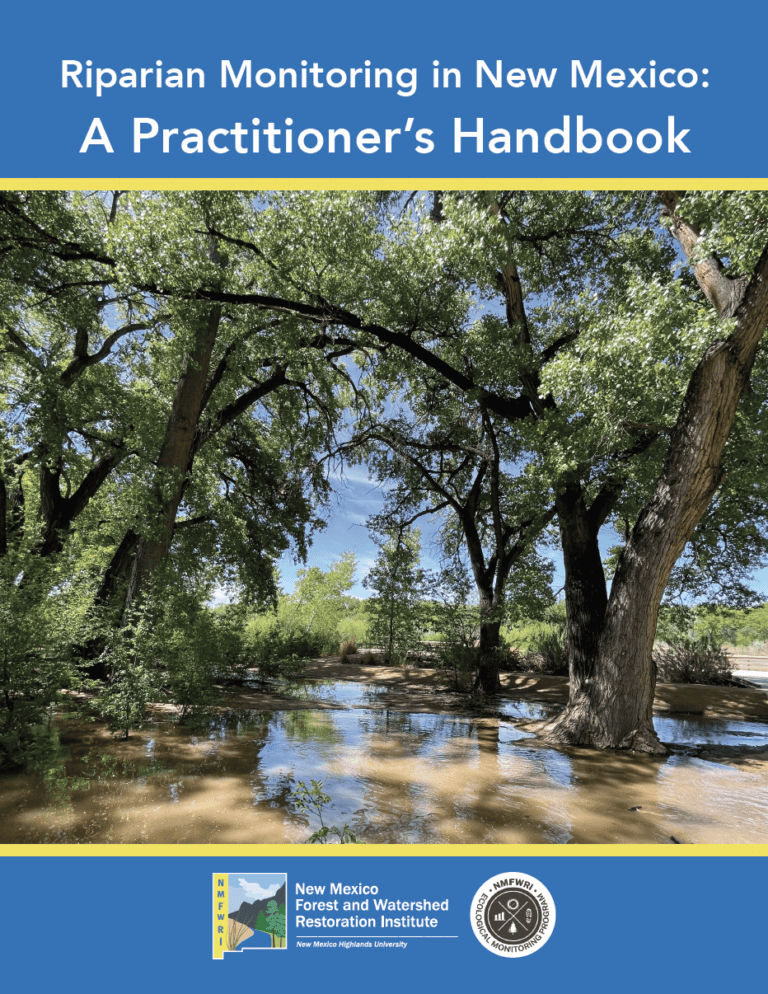
The Ecological Monitoring team at NMFWRI has published a comprehensive guide to Riparian Monitoring for practitioners The 290-page handbook offers a deep look at, and practical tips for, establishing plots, collecting, analyzing and sharing data, and ensuring quality control.
The handbook is the latest offering from the NMFWRI Monitoring team, which has also produced a detailed Upland Ecological Monitoring Field Guide.
According to the Ecological Monitoring program, fuel reduction is a primary management objective for treating western riparian areas on USFS land (Stone et al. 2010) and riparian sites are frequently identified as priority areas for hazardous fuels reduction in community wildfire protection plans. Unfortunately, there is insufficient science available to guide the fuel management process. Riparian areas, despite their ecological importance, have been poorly studied with regard to fire and fuel dynamics. Also lacking are any long-term data comparing the ecological impacts of various treatments (Dwire and Kauffman 2003; Stone et al. 2010). NMFWRI aims to remedy this by conducting long-term monitoring on treatment impacts in riparian sites. Learn more about our work in riparian areas here.