By Andrew Persante
The Greater Rio Grande Watershed is continually threatened by decreased bankfull overflow that feeds its floodplains, persistent human disturbances from urban development and agriculture, and shifting fire regimes due to drought and non-native invasive encroachment. Increased frequency, intensity, and severity of wildfire has a profound effect on this already drought-stressed region. Riparian areas and the watersheds they contribute to are at high risk of ecologic degradation, especially in the wake of severe wildfires. The continued maintenance and monitoring of these sensitive systems is crucial to preserving the health and function of both natural and urban areas in the Southwest.
The New Mexico Forest and Watershed Restoration Institute (NMFWRI), as part of the Greater Rio Grande Watershed Alliance (GRGWA), is committed to protecting these delicate areas through systematic ecological monitoring. GRGWA is a multi-agency collaboration between soil and water conservation districts (SWCDs), Pueblos, and other stakeholders focused on restoration at the landscape-scale through removal of non-native riparian species paired with thorough ecological monitoring. The Ecological Monitoring team at NMFWRI follow collaborative management plans and utilize specialized protocols to support pre– and post-treatment monitoring of these sensitive systems.
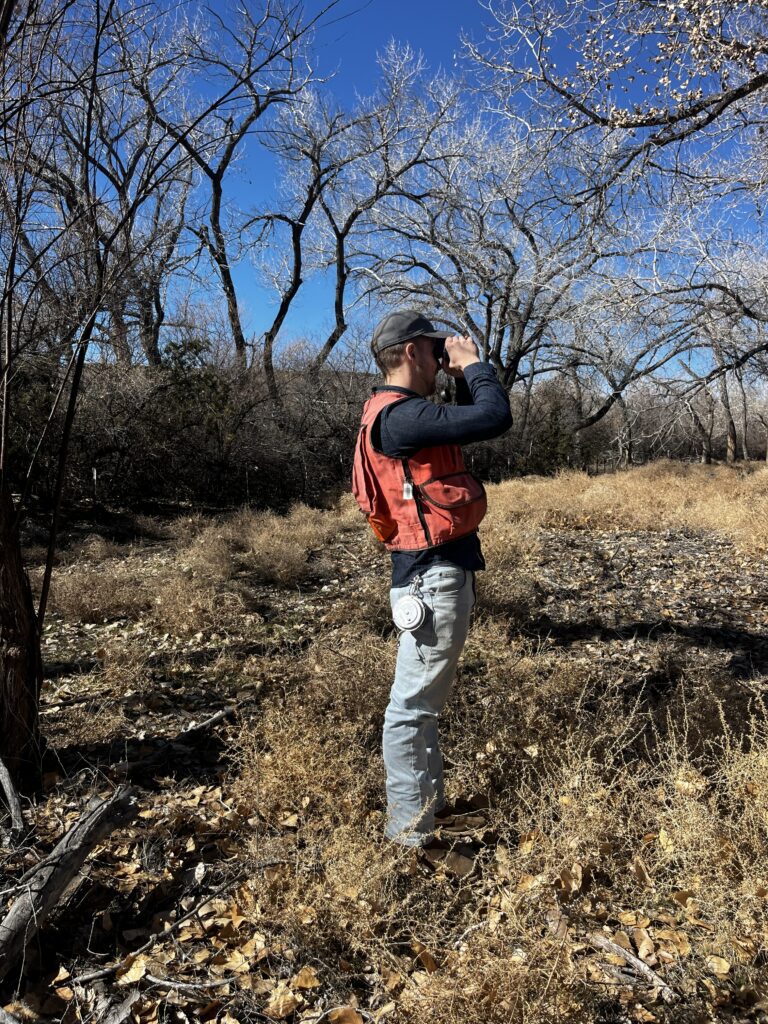
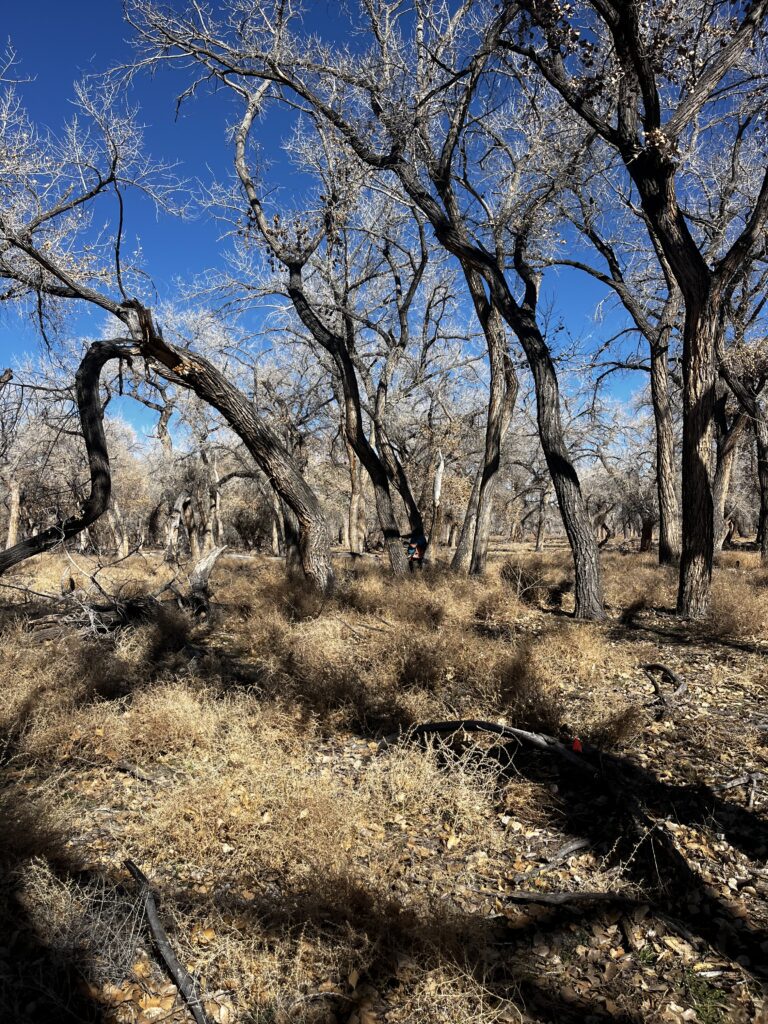
Besides GRGWA, the Ecological Monitoring team at NMFWRI have ongoing projects all around New Mexico, from Socorro to Grants to Taos and beyond. At many of these sites, the crew has noted invasive species such as Tamarisk, Russian thistle, Siberian elms, and Russian olive (Vincent Vispo, Assistant Crew Lead, recently wrote an article on Russian olive). Invasive riparian species can become well established in a relatively short period of time and take over ecological niches where they have out-competed native species. Treatment of these aggressive phreatophyte species becomes complicated when the invading species fill a role such as providing habitat or food sources.
One such invasive – salt cedar (Tamarix spp.) – which reproduces prolifically through seed or rhizomes, changes soil composition by depositing large amounts of salt into the bank, decreasing microbe content. It outcompetes native Bosque species by shading them out and making soils less habitable. It has no natural predators here in the Southwest and is extremely resilient, able to bounce back intensely after cut-stump treatment methods or after wildfire. Despite decreasing habitat quality, once Salt cedar becomes established, it provides shelter for native bird species and pollen for honeybees, convoluting management and removal plans. Ultimately, the Bosque is in a state much different now than it was when humans first inhabited these floodplains. As Vispo noted in a recent reflection:
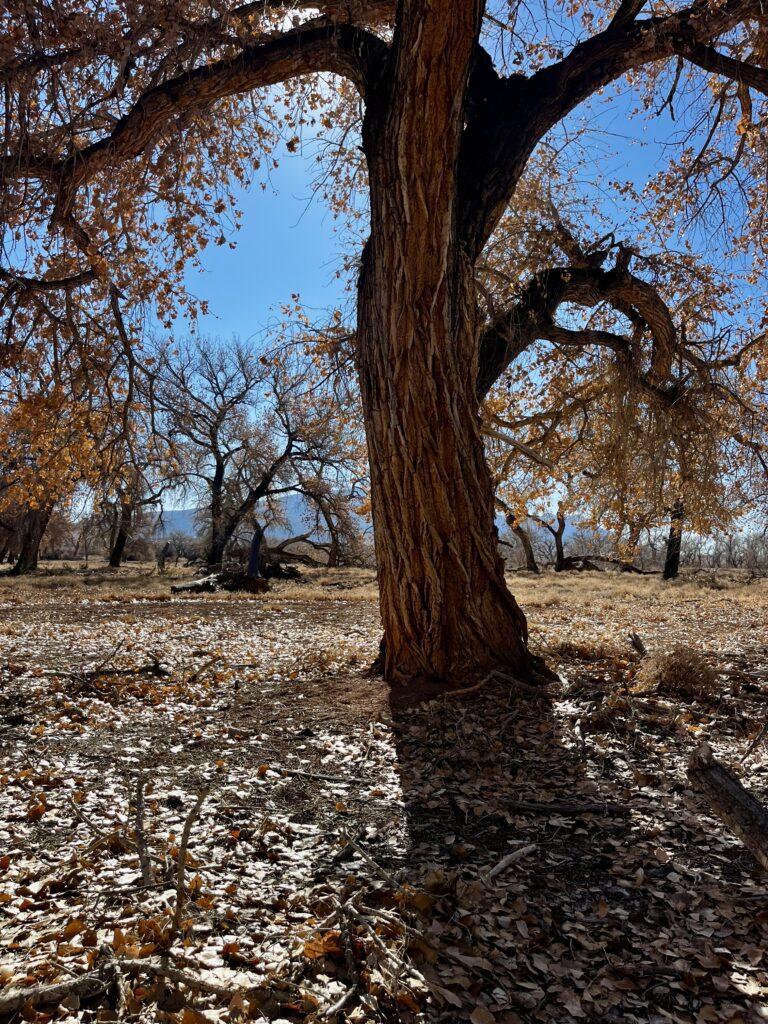
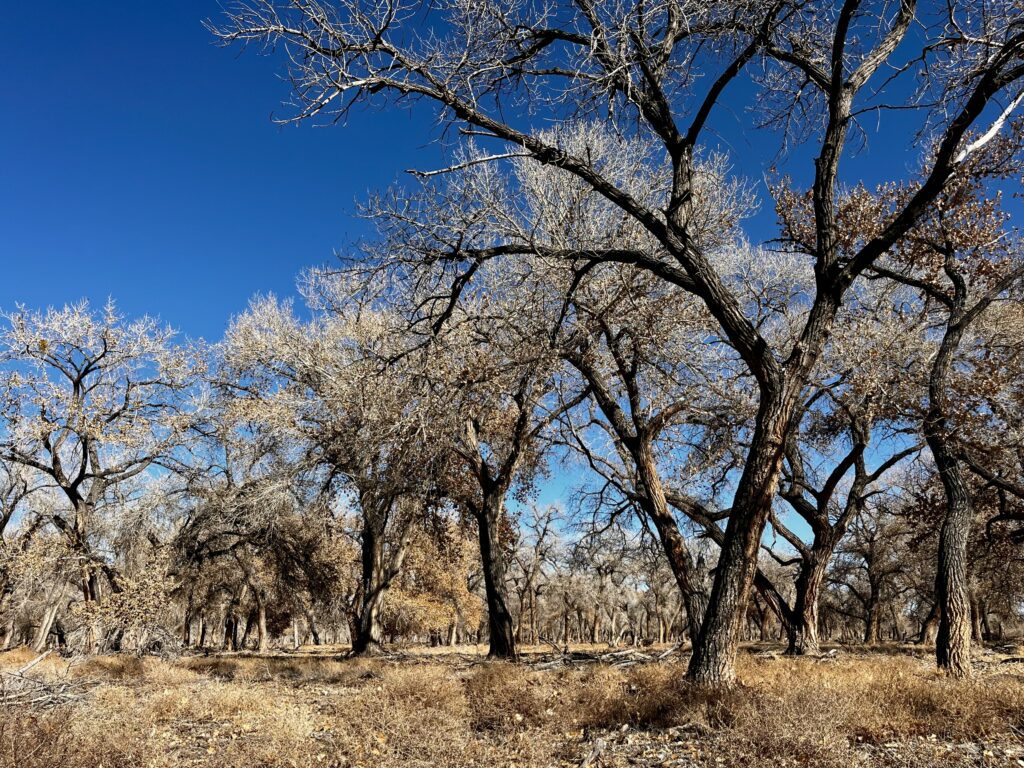
“The bosque is such a unique and really quite strange ecosystem. It’s beautiful, and I think that part of its beauty comes from the same reasons why we find manicured parks beautiful. Both parks and the bosque are savanna-like: tall trees with high crowns and grasses (or Russian thistle) underneath. This creates an environment with shade and protection from above, but not much to disrupt sightlines at ground-level, allowing us to feel both sheltered but also aware of our surroundings. These are also the kinds of ecosystems (at least in structure if not plant and animal communities) that we evolved in 250,000 years ago, so there might still be a part of us that recognizes them as ‘home.’ What makes it feel so strange is that the bosque is a fundamentally unnatural ecosystem in its current state. The floods that once maintained it don’t happen anymore. Perhaps that is part of the beauty too – the tragic sort of beauty of a thing you know will not last, which makes it all the more striking in the moments we get to experience it.”
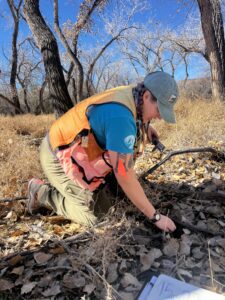
Springtime is rapidly approaching here in the Southwest and it feels like the last breath of winter is fading quickly. It has been an extremely dry winter for us here in northern New Mexico; fire weather alerts are becoming a daily siren of the risk potential. Uncharacteristically dry seasons like this are another major indication why monitoring is an essential component to restoration; by designing plans that consider fuel type, density, and enchroachment of invasives, managers can help increase ecosystem resilience. In the current era of human alteration, the natural systems around us are in constant flux – and being able to quantify and document these changes is at the heart of what the Ecological Monitoring team has been focused on since NMFWRI was established in 2005. Despite this positive motive, navigating private land grants can be met with resistance, largely stemming from unfamiliarity or skepticism within the community. Promoting ecological knowledge and proactive discussion remains a focal point of the NMFWRI’s mission through public outreach, handbooks, research, workshops, and data system development.