By Alan Barton, NMFWRI Director
A headline in the Washington Post on Feb. 23 read: “Blizzard blankets Northeast with snowfall pushing 2 feet, with more falling.” On Feb. 7, the New York Times had a headline that read: “We love you, snow. Now go away.” Out west, however, the news has been very different. A Los Angeles Times headline on Feb. 11 read “Record snow drought in western U.S. raises concern for a spring of water shortages and wildfires.” And on Feb. 23, Source New Mexico reported: “Record high winter temperatures and ongoing snow drought are leaving New Mexico with a fraction of its typical snow pack and at higher risk of wildfire, even after accounting for February storms, according to a recent briefing from National Oceanic and Atmospheric Administration scientists. … New Mexico and nine other states experienced the warmest three-month period between November 2025 and January 2026 in at least 131 years.”
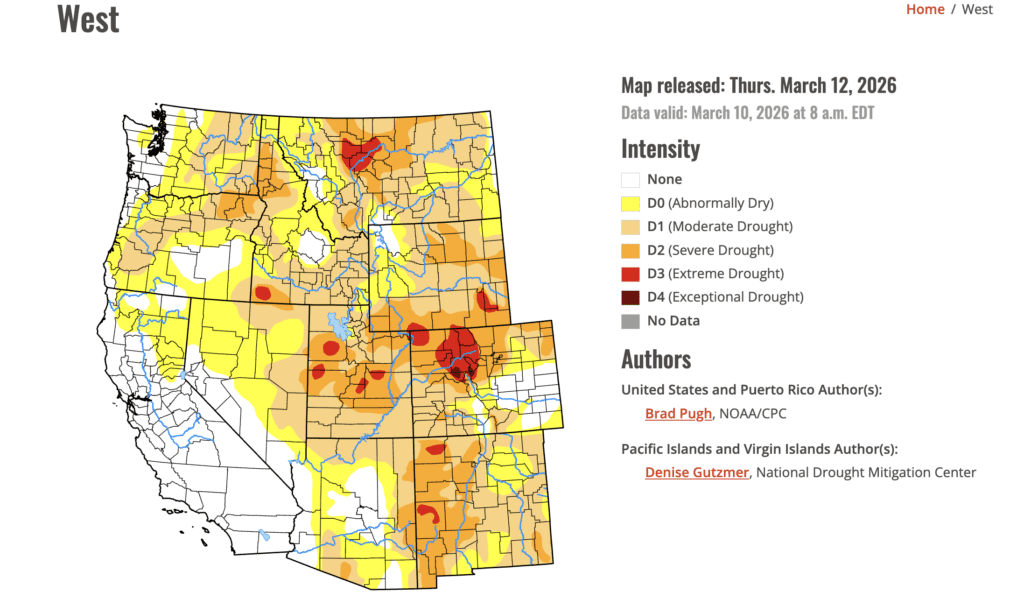
Residents of the eastern states who have faced an exceptionally cold winter may find it difficult to believe that unseasonably warm weather in New Mexico and our neighboring states has us searching the skies for snow clouds. However, around northern New Mexico, several times this winter when snow was predicted, it failed to materialize, leaving us wondering what the coming months hold in store. For those of us who work to prevent large, catastrophic wildfires, the dearth of snow is very concerning.
The risk of large, high intensity wildfires is higher when forests are drier. In the short term, trees and soils are dried out by hotter temperatures, lack of rainfall, and high winds. But over the course of a year, a good snow pack in the mountains during the winter can ease dry conditions during the fire season. A snow pack is formed when several significant snowstorms blanket an area over the winter months. Then as that snow slowly melts in the spring, it keeps the forests moist during the season when fires are most likely to burn, which historically has been the months of May and June in New Mexico. Monsoon rains then take over for the remainder of the summer. These patterns are changing, however, and the fire season is extending into March and April, if there is less snow on the ground, and through July and August if monsoon rains don’t materialize.
Higher average temperatures leading to a reduced snow pack are one among a variety of factors contributing to conditions that present a higher risk of dangerous wildfires. As we move from winter into spring with less snow on the ground, residents of New Mexico must exercise greater than usual caution in forested and fire-prone areas through the late spring and summer. Pay attention to warnings from news sources and on signs posted in natural areas, and adhere to fire-safe practices, such as those recommended by the Department of the Interior in “10 tips to prevent wildfires.” Follow the New Mexico Forestry Division’s Fire Info page for public land closures, fire conditions, and active fire updates and sign up for email alerts. And use the NM Fire Viewer, developed by the NMFWRI GIS team, to track active wildfires and prescribed fires, see historic burn scar boundaries, vegetation treatments and more.
Increased risk need not translate into a catastrophic wildfire if everyone is careful while working or recreating outdoors.