In late May, the NMFWRI Collaboration Program attended Confluence 2026, hosted by the Western Collaborative Conservation Network (WCCN) and co-convened by Crowd Conservation, Trees, Water & People, and Strategic by Nature. The gathering brought together practitioners, researchers, facilitators, land managers, and community leaders from across the West who are working to strengthen collaborative conservation efforts within their respective regions and communities. In addition to participating in the conference, the team led a session focused on collaborative capacity building, resource coordination, and cross-network learning. 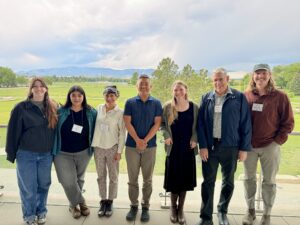
Collaboration Specialist, Alejandro Collins, led a Skill Building Session titled NM Collaboration Hub: A Collaborative Response to Needs, which highlighted the NM Collaboration Hub as an example of how NMFWRI’s Collaboration Program responded to needs identified by collaboratives related to resource access, coordination, and communication. The session also created space for participants across the West to discuss local challenges, shared priorities, and the ongoing needs of collaborative groups within their own regions. These conversations reinforced the importance of continuing to create spaces where practitioners can exchange ideas, strengthen relationships, and learn from one another.
NMFWRI Director, Dr. Alan Barton, also led a session focused on how collaboratives can benefit from coordinating and networking across topical boundaries to share resources, build capacity, and more effectively address gaps in their work.
One of the most meaningful aspects of Confluence was the opportunity to gather with others who deeply understand both the rewards and challenges associated with collaborative conservation work. Across landscapes and organizations, many practitioners are navigating similar complexities related to building trust, sustaining partnerships, and continuing long-term work within changing social and environmental conditions. The conference served as an important reminder of the value of communities of practice and the relationships that sustain this work over time.
The Collaboration Team is grateful for the opportunity to participate in and contribute to this year’s gathering and looks forward to continuing to strengthen relationships and partnerships with collaborative practitioners across the region.