By Alan Barton
“Give me six hours to chop down a tree, and I will spend four
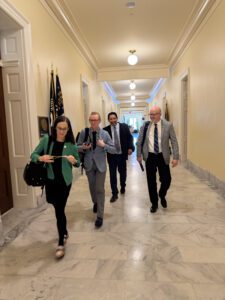
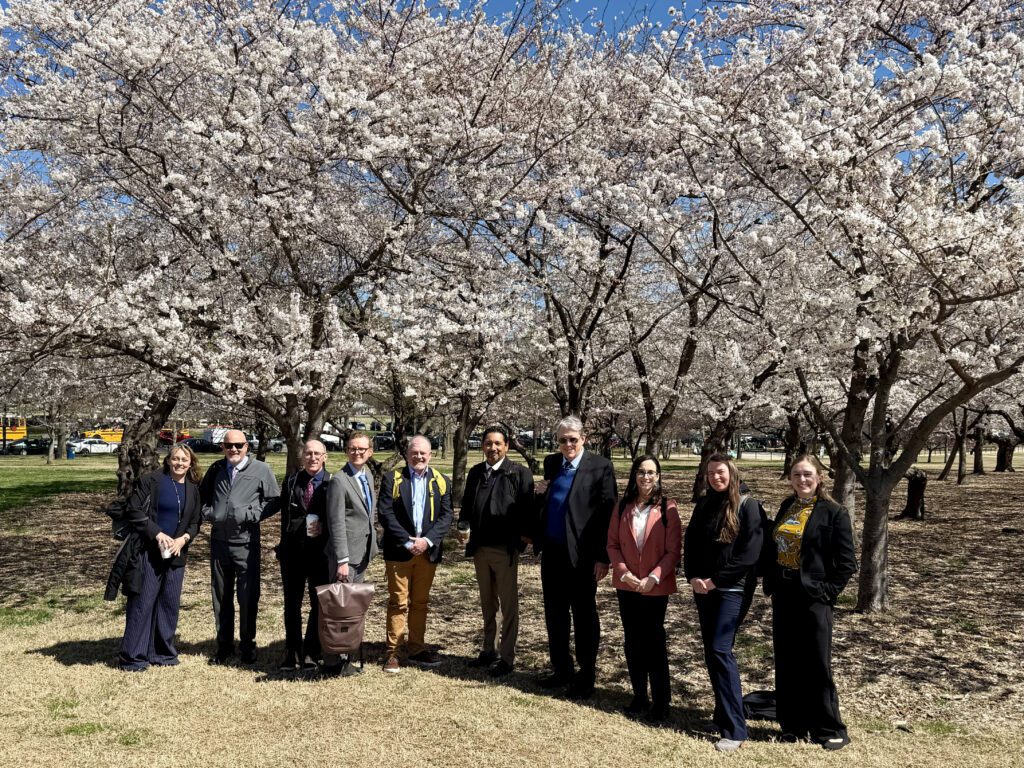
sharpening the axe,” a quote commonly attributed to Abraham Lincoln, suggests that planning and preparation are keys to success. Around the NMFWRI, this thought is especially pertinent during the month of March, which is planning season at our Institute. It is during this month that our annual planning cycles converge. In March, while our Monitoring, GIS, Collaboration, and Outreach teams continue their important work around New Mexico, NMFWRI administrators are busy with planning and assessment. Our Public Information Specialist, Staci Matlock, is putting the finishing touches on our Annual Impact Report, highlighting our accomplishments from 2025 (you can view all of our Annual Impact Reports on our website). At the same time, our Program Managers and Directors, and our Budget and Finance Manager, Kris Bellmore, are finalizing our work plan and budget for 2026. And finally, March is the time for our annual visit to Washington, D.C. to begin planning our projects and budget for 2027. Needless to say, it is a busy month for our Institute’s leadership; this March, Deputy Director Edward Martinez and Research Associate Michael Roberts joined me and our SWERI colleagues from Northern Arizona University and Colorado State University for a week-long trip to our cherry-blossom-adorned nation’s capital, where we met with our Congressional delegations and agency leadership.
Our Washington conversations are always enlightening, and they were especially helpful this year as we learned about some of the administrative changes that our agency partners are carrying out, including the broad reorganization that the Forest Service is implementing, and the new consolidated Wildland Fire Service at the Department of the Interior. We discussed some of our own administrative changes with them, including ongoing efforts to expand the SWERI model to additional states, and the NMFWRI’s cross-programmatic FIRENM education and outreach project that Program Managers Shantini Ramakrishnan, Crystal Medina and Kathryn Mahan initiated over the past year. FIRENM brings together staff expertise in monitoring, collaboration and outreach to assist private landowners with ongoing recovery efforts from the 2022 Hermit’s Peak-Calf Canyon fire, and to increase mitigation efforts that reduce the risk of catastrophic wildfire. On Capitol Hill, New Mexico Congressional staffers discussed some of their research and legislative priorities with us, and we provided updates on our projects and accomplishments. These visits also provide a great opportunity for informal conversations, team building, and planning with our colleagues from the other SWERIs. While planning and assessment occurs behind the scenes, it is a necessary part of our operations and supports the frontline field work with partners and collaborators for which NMFWRI is known around the state and the Southwest. The hard work that our Leadership Team puts into preparing our work plan establishes an important roadmap that gives us direction, solidifies our commitment to collaborative work, and guides us through the year, until next March, when the cycle starts anew.