By Alan Barton, NMFWRI Director
The mission of the New Mexico Forest and Watershed Restoration Institute is to work with partners to reduce the risk of catastrophic wildfires and restore resilient ecosystems and communities in New Mexico. Putting this mission into practice draws together specialists that work for the NMFWRI and our many partners around New Mexico, who apply their training, skills and experience in a range of different disciplines to the complex and challenging issues that arise in managing forests. This is the nature of forestry work, which always encompasses management of ecosystems and all their components—not just trees and plants, but also water, air, soils, wildlife, and microorganisms—and also management of people and all their interactions with forests—for a wide range of products, for recreation, and for ecosystem services like clean air and water, carbon sequestration, and flood control.
Recruiting and training people into this diverse forestry workforce is an important part of the work of the NMFWRI. Each year, we hire students and provide them with hands-on field experience and challenging projects that develop their skills. Our staff also work closely with landowners, offering workshops and one-on-one capacity building in forest and watershed management. And recently, the NMFWRI signed
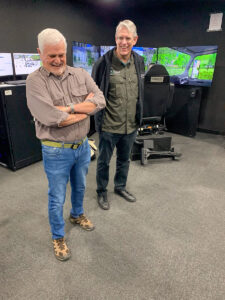
an agreement with the Wildfire Resiliency Training Center (WRTC), located in Las Vegas at Luna Community College, to coordinate and instruct courses in a variety of practices necessary for effective mitigation of wildfire risks and landscape recovery after a wildfire. We look forward to collaborating with the WRTC to build the capacity necessary to solve today’s management issues and to sustain a skilled forestry workforce to steward our state’s forests well into the future.
If you would like more information on the WRTC or are interested in the trainings they offer, consult https://sites.google.com/luna.edu/wrtc
Or contact,
Wes Schuchman: wschuchman@luna.edu
Hank Blackwell: hblackwell@luna.edu
Currently, the WRTC has openings in these upcoming February classes:
S 131 (February 14 & 15 WIldland Firefighter Type I
S 215 (February 21, 22 & 28) Wildfire Operations in the Urban Interface