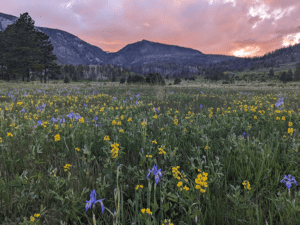
Monitoring
Upland Ecological Monitoring
Upland sites, or those above the elevation where flooding generally occurs, have a variety of vegetation types including Piñon-Juniper, Ponderosa Pine, Dry & Wet Mixed

Upland sites, or those above the elevation where flooding generally occurs, have a variety of vegetation types including Piñon-Juniper, Ponderosa Pine, Dry & Wet Mixed
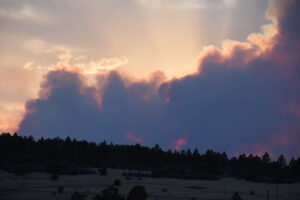
The New Mexico Forest and Watershed Restoration Institute’s Ecological Monitoring Program maintains a professionally managed field crew to collect and analyze data on short and long-term
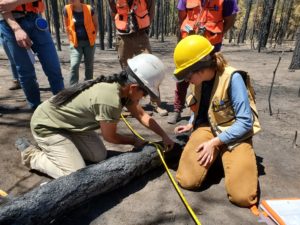
Navigating a changing job market Students, Colleagues and Peers: For those of you who have had positions terminated or who are in pathways positions and

The fires that burned hundreds of homes around Los Angeles recently were yet another stark reminder that wildfire risks driven by drought and wind are
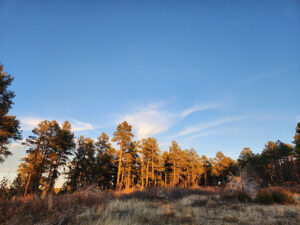
NMFWRI staff at Luna Community College’s Wildfire Resiliency Training Center simulation lab. By Alan W. Barton, Director As we begin 2025, NMFWRI is proud
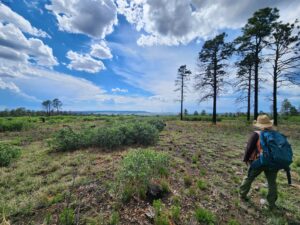
By Dr. Alan Barton Resiliency. This is a concept that we invoke frequently in our work at the New Mexico Forest & Watershed Restoration Institute.
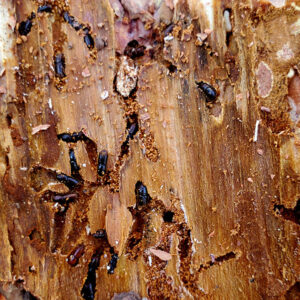
As part of our continuing Querencia in Action series, NMFWRI hosted a bark beetle workshop in Rociada with instructor Victor Lucero, Forest Health Coordinator for

NMFWRI’s Ecological Monitoring team spent a December day in the field at Rowe Mesa with staff from USGS, coring trees on treated and untreated sites
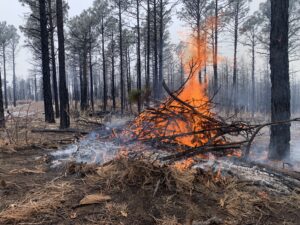
The New Mexico Forest and Watershed Restoration Institute (NMFWRI), in partnership with New Mexico Highlands University’s (NMHU) Department of Forestry and FORT-CREST, co-hosted a compelling